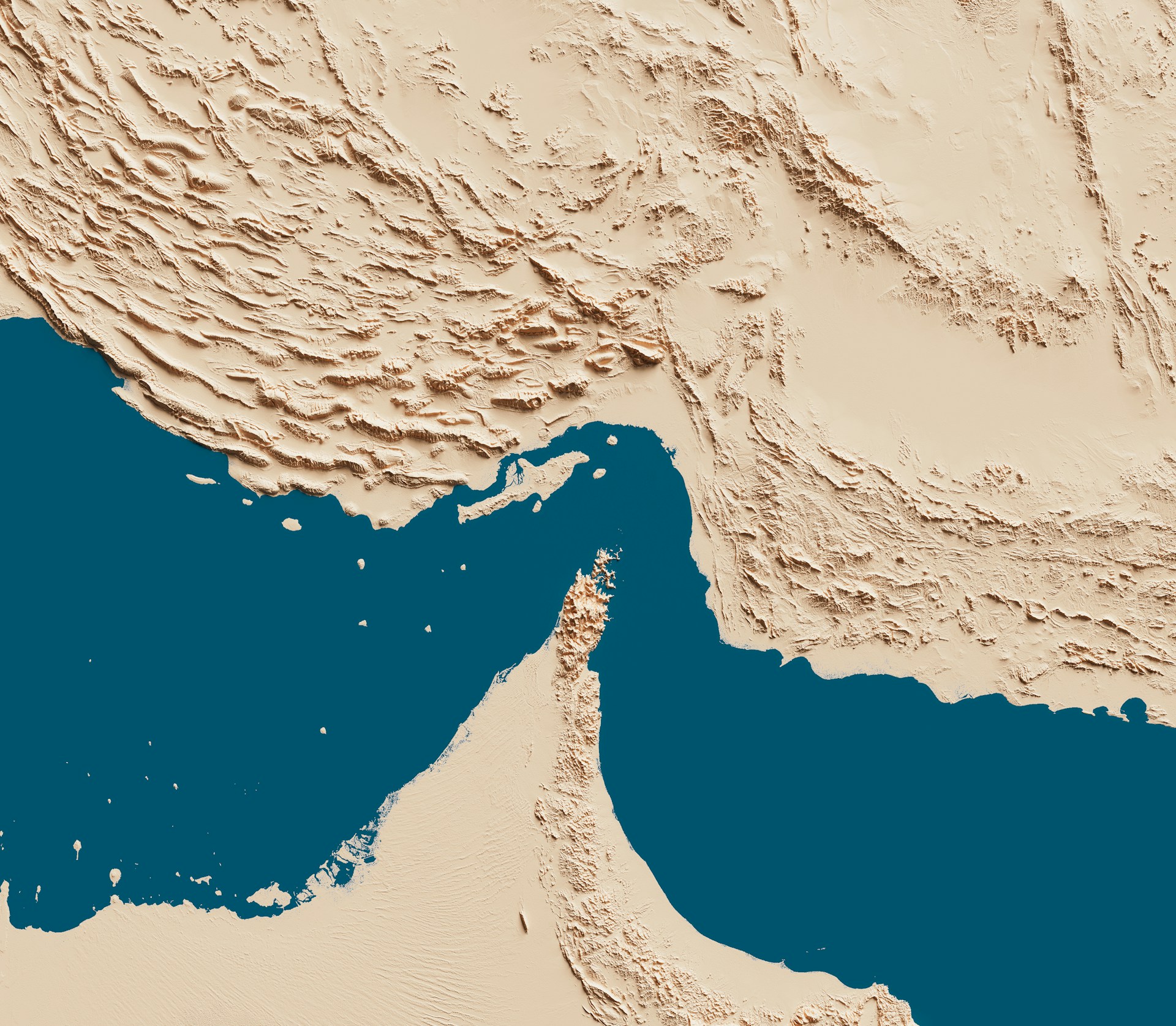
Supply Chains Under Pressure: What the Strait of Hormuz Reveals About the Future of Construction
Author
Published on
Niccolò Lissoni | niccolissoni
In an increasingly interconnected world, architecture and construction are often perceived as local practices. In reality, they are deeply embedded within global systems of supply, logistics, and geopolitical stability. The recent tensions affecting the Strait of Hormuz offer a striking reminder of this dependency. When a single maritime corridor is disrupted, the consequences extend far beyond energy markets, reaching directly into the core of the construction industry.
A Hidden Dependency: Construction as a Global Network
A significant portion of the world’s raw materials and industrial components travels through a limited number of maritime chokepoints. The Strait of Hormuz alone handles a substantial share of global energy flows, making it one of the most critical arteries of international trade.
When transit through this corridor is restricted, the impact is immediate:
shipping routes are diverted;
delivery times increase;
insurance and transport costs rise exponentially.
What is less immediately visible but strategically more relevant is how these disruptions cascade into the construction sector. Materials such as steel, cement, and refined components are not simply commodities; they are time-sensitive inputs within highly coordinated project ecosystems.
The Cost of Disruption
Recent analyses suggest that continued instability in the region could significantly increase the cost of key construction materials, particularly those reliant on energy-intensive production processes.
In some markets, shipping detours alone can add weeks to delivery schedules, fundamentally altering project timelines and financial planning. For high-end developments—where precision, customization, and coordination are critical—these variables become even more sensitive.
From Efficiency to Resilience
What emerges is a shift in perspective: supply chains are no longer a purely operational concern, but a design and strategic variable. For architects, developers, and procurement specialists, this introduces new questions:
How can projects be designed with greater material flexibility?
To what extent can local sourcing mitigate global volatility?
How should procurement strategies evolve to anticipate disruption rather than react to it?
In this context, design is no longer confined to form and function: it extends into resilience planning.
In luxury and bespoke developments, procurement has traditionally been driven by quality, craftsmanship, and brand alignment. Today, an additional layer is becoming essential: supply chain intelligence. The ability to anticipate bottlenecks, diversify supply channels, and maintain flexibility becomes a defining competitive advantage.
Designing Within a Global Reality
The disruption of a single maritime passage may appear distant from the world of interiors and architecture. Yet, it reveals a fundamental truth: every project is part of a global system.
Understanding this system—its vulnerabilities, its dynamics, and its opportunities—allows for a more informed and ultimately more refined approach to design and development.
In this sense, the future of construction will not be defined solely by materials or aesthetics, but by the capacity to operate intelligently within an increasingly complex global landscape.
YOU MAY ALSO WANT TO READ

Culture
Apr 20, 2026
Luxury Across Markets: How Cultural Context Redefines the Meaning of Luxury
An analysis of how luxury is interpreted across China, Europe, and the United States, and why cultural context is essential for high-end design, procurement, and international market positioning.

Design
Apr 19, 2026
Beyond the Visual: The Strategic Role of Scent in High-End Interior Design
An exploration of scent as a strategic design tool in high-end interiors, examining how olfactory elements shape identity, perception, and experience beyond the visual dimension.