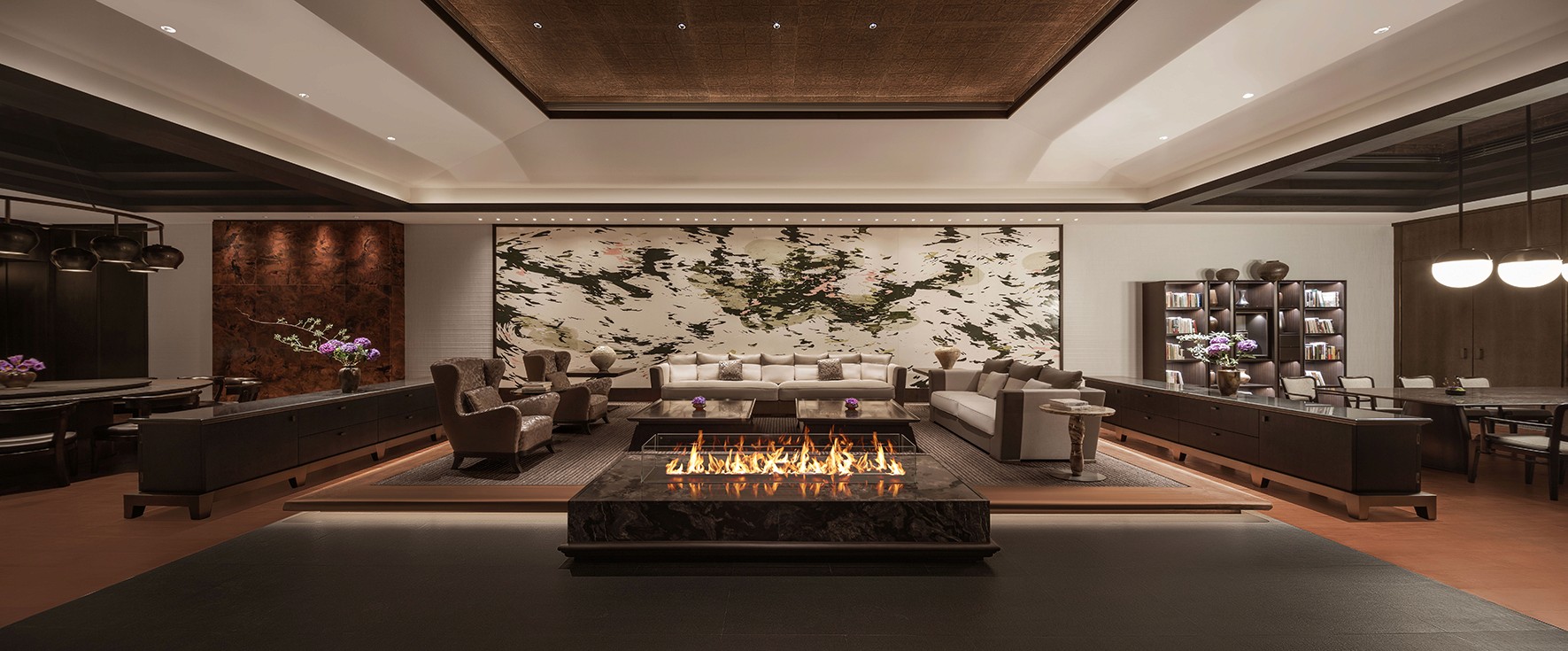
© Promemoria
Luxury Across Markets: How Cultural Context Redefines the Meaning of Luxury
Author
Published on
Niccolò Lissoni | niccolissoni
Luxury has never been a static concept. While it is often associated with rarity, craftsmanship, and aesthetic refinement, its meaning shifts significantly depending on cultural context and market expectations. What is perceived as desirable, prestigious, or truly “luxurious” in one region may appear excessive, understated, or even irrelevant in another. For companies operating internationally—particularly within high-end design, hospitality, real estate, and bespoke furniture procurement—understanding these nuances is not merely a marketing exercise. It is a strategic necessity. Luxury, after all, is deeply embedded in cultural values, social structures, and evolving consumer aspirations. In this perspective, three major markets illustrate how profoundly the notion of luxury can vary: China, Europe, and the United States. Each embodies a distinct interpretation of prestige, reflecting different relationships with tradition, innovation, and service.
Luxury as Cultural Expression
Before examining individual markets, it is essential to recognize that luxury products rarely function as simple commodities. They operate as cultural symbols—vehicles through which individuals communicate identity, belonging, aspiration, and taste.
In high-end interiors and furniture procurement, this cultural dimension becomes particularly evident. Materials, finishes, spatial arrangements, and even procurement timelines can carry meanings that extend far beyond aesthetics. A marble surface, a handcrafted cabinet, or a technologically integrated environment may each signal different values depending on the cultural framework in which they are experienced.
For international design and procurement agencies, the challenge lies in translating these meanings into coherent projects that resonate locally while preserving the authenticity of the brand or design vision.
China: Luxury as Status and Technological Sophistication
China’s luxury market is one of the most dynamic and rapidly evolving in the world.
Its contemporary interpretation of luxury reflects a unique convergence of social visibility, technological integration, and aspirational modernity.
Social Signaling and Prestige
In China, luxury often serves as a visible marker of achievement and social status.
High-end products and environments are expected to communicate success clearly and unequivocally. This does not necessarily imply ostentation, but it does favor recognizability and symbolic value.
Within interior design and hospitality projects, this tendency frequently translates into spaces that emphasize visual impact: distinctive materials, refined lighting, and architectural gestures that immediately convey exclusivity.
Integrated Technology as a Luxury Standard
Equally significant is the role of technology. In the Chinese market, innovation and digital integration are not secondary features—they are often perceived as intrinsic components of luxury.
Smart environments, integrated automation, and seamless digital interfaces contribute to a sense of modern prestige. For high-end residential or hospitality projects, technological sophistication is frequently expected to coexist with aesthetic refinement, forming a unified expression of contemporary luxury.
Europe: Heritage, Craftsmanship, and the Language of Quiet Luxury
European luxury—particularly within Italy and France—rests upon a different foundation. Rather than emphasizing visibility or technological novelty, it often privileges continuity, craftsmanship, and cultural heritage.
The Legacy of Craftsmanship
Europe’s luxury ecosystem is deeply intertwined with centuries-old artisanal traditions.
In Italy especially, craftsmanship is not merely a production method but a cultural identity.
Furniture, materials, and decorative elements frequently embody generations of knowledge and skill. The value of these objects lies not only in their aesthetic quality but also in their provenance—the narrative of expertise embedded within each piece.
For procurement and design professionals, this heritage represents both an opportunity and a responsibility: the opportunity to access an unparalleled network of artisans and suppliers, and the responsibility to preserve the integrity of these traditions within contemporary projects.
The Rise of Quiet Luxury
In recent years, the concept of quiet luxury has gained increasing prominence across European markets. This approach favors discretion, material excellence, and subtle sophistication over overt branding or visual excess.
Luxury, in this context, is recognized through nuance: the depth of a fabric, the precision of joinery, the tactility of natural materials, or the harmony of spatial proportions.
The emphasis shifts from visible status to cultivated taste.
Such an aesthetic aligns naturally with bespoke procurement strategies, where each element is carefully curated to achieve a balanced and enduring interior narrative.
United States: Luxury as Service, Efficiency, and Experience
The American luxury landscape presents yet another interpretation, one strongly shaped by the culture of service and the pursuit of efficiency.
The Primacy of the Client Experience
In the United States, luxury is frequently defined less by the object itself than by the experience surrounding it. Personalized attention, responsiveness, and seamless service are central components of perceived value.
For high-end projects—whether residential developments, boutique hotels, or corporate environments—clients often expect rapid execution, transparent processes, and highly attentive support throughout the project lifecycle.
Speed and Operational Excellence
Another distinctive feature of the American market is the emphasis on speed and operational efficiency. Luxury clients frequently associate excellence with the ability to deliver complex solutions within demanding timelines.
This expectation places significant importance on project management capabilities, supply chain coordination, and logistical precision. In the context of FF&E procurement, the capacity to align design vision, production processes, and international logistics becomes a defining competitive advantage.
Designing Luxury for a Global Audience
For agencies and professionals operating across international markets, these differing interpretations of luxury present both challenges and opportunities.
A project conceived for a European context may require technological enhancement to resonate with Chinese clients. Conversely, a design originally developed for the Chinese market might need greater material subtlety and restraint to align with European sensibilities. In the United States, the same project may be evaluated primarily through the lens of service quality and delivery efficiency.
This is precisely where a culturally informed approach to design and procurement becomes indispensable. Understanding the symbolic language of luxury—how it manifests through materials, technologies, spatial design, and client experience—allows projects to maintain their conceptual integrity while adapting meaningfully to different markets.
YOU MAY ALSO WANT TO READ

Design
Apr 19, 2026
Beyond the Visual: The Strategic Role of Scent in High-End Interior Design
An exploration of scent as a strategic design tool in high-end interiors, examining how olfactory elements shape identity, perception, and experience beyond the visual dimension.

Culture
Apr 18, 2026
Supply Chains Under Pressure: What the Strait of Hormuz Reveals About the Future of Construction
How disruptions in the Strait of Hormuz are reshaping global supply chains and why resilience, procurement strategy, and material flexibility are becoming critical in high-end construction.